Are Adaptive Fitness Classes Worth Seeking Out, Even If You Don't Need Modifications?
Quick Answer: Adaptive fitness classes are built around offering multiple movement options for every exercise rather than one fixed ‘correct’ version, which means instructors are specifically trained to coach form cues and regressions clearly — a teaching style that benefits beginners, people returning from injury, and honestly anyone who’s ever felt lost in a standard class, not just people who need modifications.
The label ‘adaptive’ undersells how broadly useful this coaching style actually is.
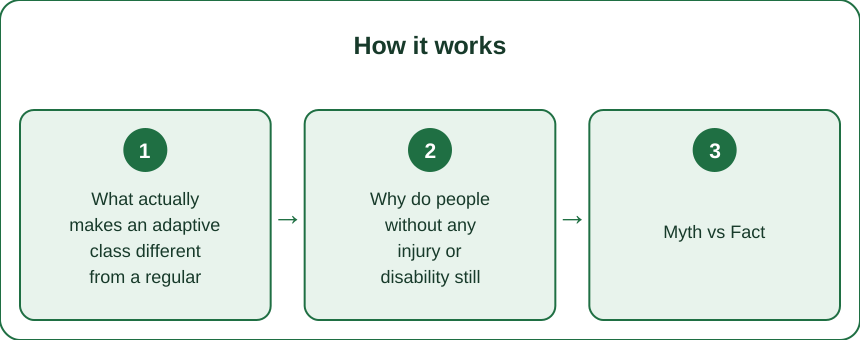
What actually makes an adaptive class different from a regular group fitness class?
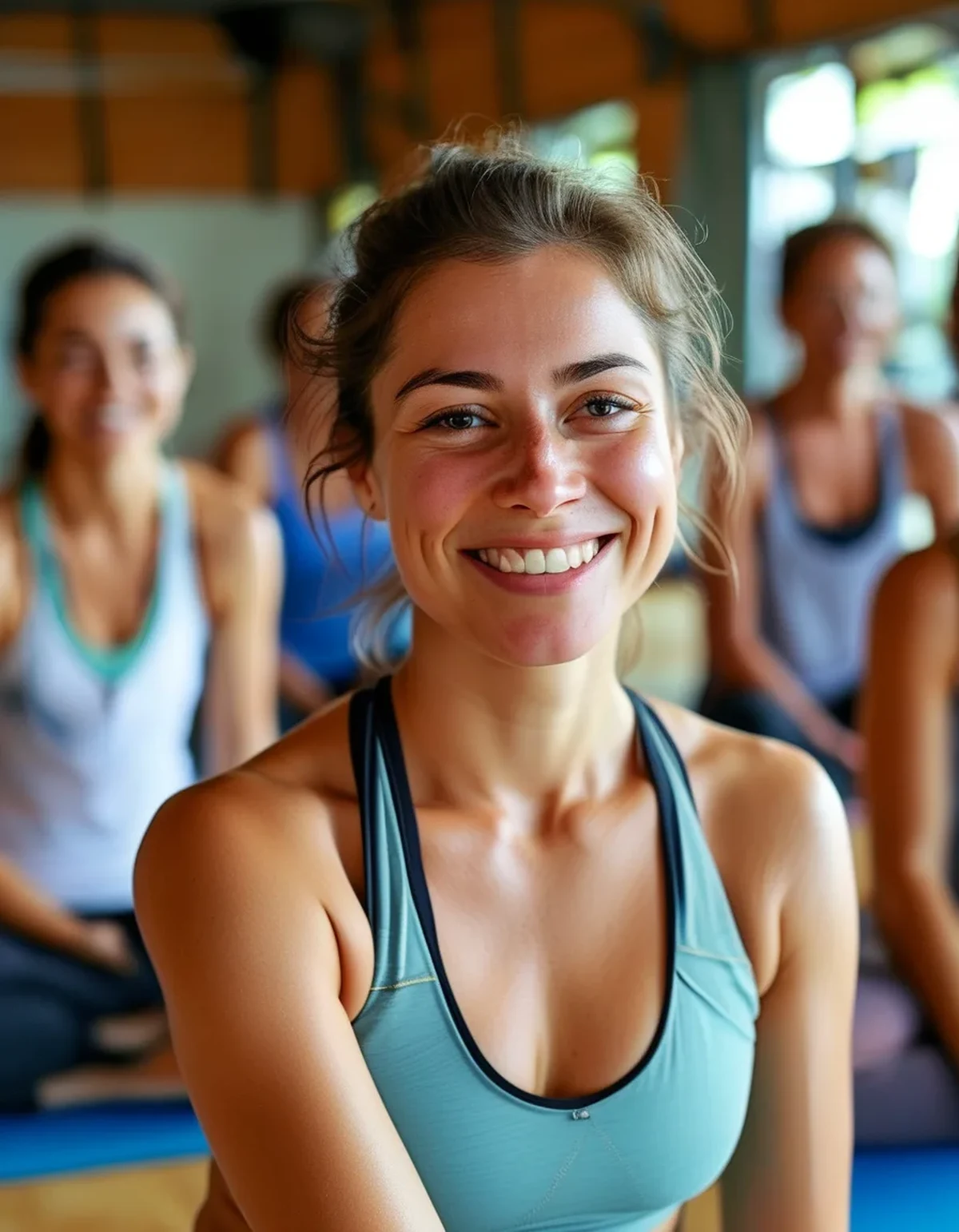
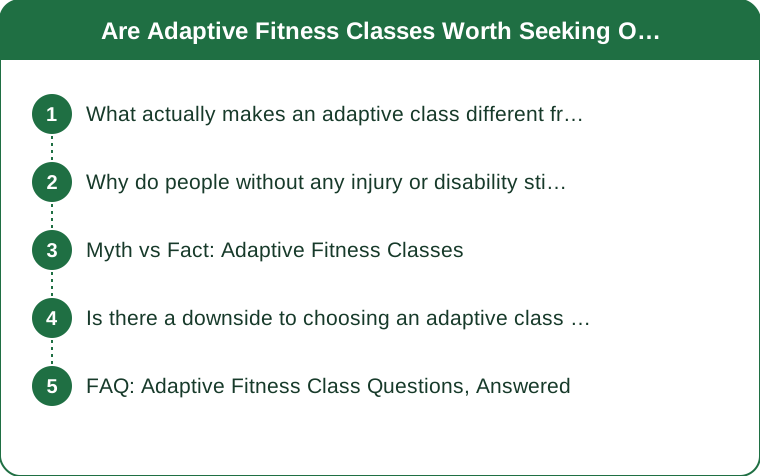
Instructors in adaptive classes are trained to present two or three variations of every single movement up front, rather than demonstrating one version and only offering a modification if someone asks or visibly struggles.
This changes the class dynamic considerably: nobody has to identify themselves as needing help, and everyone gets to choose the version that fits their body that day, which turns out to reduce the intimidation factor for a much wider range of people than the ‘adaptive’ label suggests.
Why do people without any injury or disability still benefit from this coaching style?
Most standard fitness classes are built around an assumed ‘default’ body and fitness level, which leaves anyone outside that assumption — beginners, older adults, people with an old nagging injury — guessing at how to adjust on the fly.
An adaptive class removes that guesswork by making options the norm rather than the exception, which several regular attendees describe as lowering their overall stress about ‘doing it wrong’ even when they don’t strictly need a modification that day.
Myth vs Fact: Adaptive Fitness Classes
Myth: Adaptive classes are only appropriate for people with a diagnosed disability. Fact: The instruction style benefits beginners, injury-recovery, and anyone who dislikes one-size-fits-all pacing.
Myth: Adaptive classes are lower intensity across the board. Fact: Intensity is chosen by the participant through the offered variations — the highest-intensity option is often still available.
Myth: Asking for a modification in a regular class gets the same result. Fact: Being offered options by default (rather than having to ask) measurably changes how comfortable people feel taking them.
Is there a downside to choosing an adaptive class over a standard one?
The main tradeoff is availability — adaptive-specific classes are less common than standard group fitness classes, and some people find the slightly slower pacing (to allow time for explaining options) less intense than they want on a given day.
For someone specifically chasing a high-intensity, no-explanation workout, a standard class may still be the better fit; the adaptive format’s real advantage is in lowering the barrier to starting or returning to a workout habit.
FAQ: Adaptive Fitness Class Questions, Answered
Do adaptive classes cost more than regular group classes?
Usually not — most gyms and studios price them the same as any other group class on their schedule.
Will I feel out of place attending if I don’t have any visible modification need?
No — because options are offered to everyone by default, there’s no singling out of who does or doesn’t take a modification.
Are these classes only offered at specialized studios?
Many mainstream gyms now offer at least one adaptive or inclusive-labeled class alongside their standard schedule, so checking your existing gym’s calendar is worth doing before assuming you’d need to switch facilities.
TL;DR:
- Adaptive classes offer multiple movement options by default, not just on request
- This benefits beginners, injury recovery, and anyone uncomfortable with rigid pacing, not only people with disabilities
- Intensity is still participant-chosen, so the format isn’t automatically lower effort
- Availability and slightly slower pacing are the main tradeoffs versus a standard class
The label undersells it — this is really just better-designed coaching, useful well beyond its original audience.
See It in Motion
Keep Reading
This article is for general informational purposes only and is not medical advice. It is not a substitute for professional diagnosis or treatment. Always consult a qualified healthcare provider about your individual situation, especially before making significant changes to your diet or exercise routine.