What Does the Body Positive Movement Actually Mean for How You Train?
Quick Answer: The body positive movement began as a fat-acceptance and disability-rights argument that people deserve dignity and access regardless of body size or shape. Applied to training, it doesn’t mean avoiding effort or ignoring health - it means choosing goals based on capability and how you feel rather than appearance, and refusing environments that treat some bodies as problems to fix.
The phrase has been stretched so far by marketing that it’s easy to assume it means nothing. It has a specific history and a specific claim, and both are more useful in a gym than the slogan version suggests.

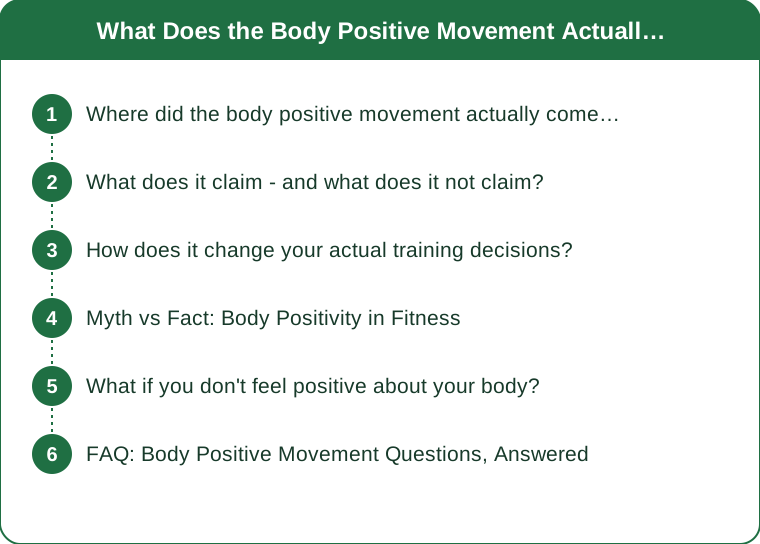
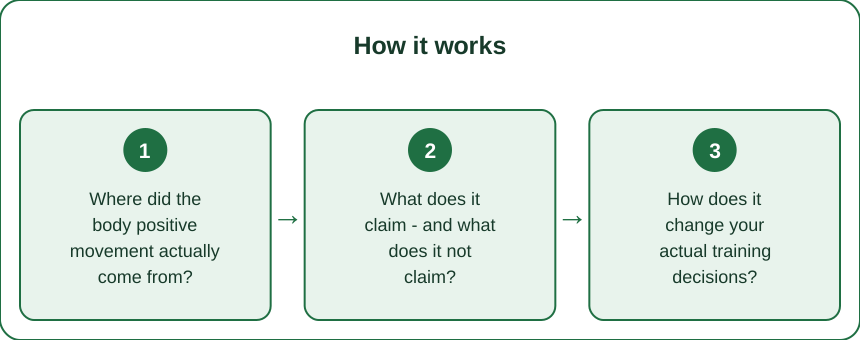
Where did the body positive movement actually come from?
Not from social media, and not from athletic wear campaigns.
Its roots are in fat-acceptance activism from the late 1960s onward, which argued that people in larger bodies were being denied medical care, employment, and basic public dignity - and that this was a civil-rights problem rather than a personal-failure problem. Disability-rights organizing ran alongside it with an overlapping argument about access.
That original claim was structural: it was about how institutions treat bodies. It was never primarily about how any individual feels when they look in a mirror.
The version that reached mass audiences in the 2010s compressed all of that into a message about self-esteem, and then commercial use compressed it further into an advertising tone. This is why the term feels both important and empty depending on who’s using it. The history is worth knowing because it tells you what the idea can actually do for you.
What does it claim - and what does it not claim?
Being precise here defuses most arguments about it.
What it claims: everyone is entitled to respect, medical care that addresses their actual complaint, clothing that fits, spaces they can use, and freedom from public commentary about their body. Also that appearance-based worth is a poor foundation for anything.
What it does not claim: that health is irrelevant, that no one should ever want to change anything about their body, or that discomfort with your own body is a moral failing.
That middle point matters. A person can pursue a genuine physical goal - strength, endurance, rehabilitation, weight change under medical guidance - without contradicting any part of the movement’s argument. What the movement objects to is the assumption that a body must be changed before it’s owed respect or access.
The most common misreading in fitness spaces is treating it as anti-effort. It’s not anti-effort. It’s anti-hierarchy.
How does it change your actual training decisions?
Four practical shifts, all of them concrete.
Goals get measured in capability, not appearance. Instead of a body-composition target, you track a five-kilometre time, a number of push-ups, how many flights of stairs before you’re breathing hard, or whether your back hurts on day four of a work stretch. These are measurable, they move faster than appearance does, and they don’t collapse on a bad-body-image day.
Adherence becomes the metric that matters. The best training programme is the one you’re still doing in eight weeks. If a programme is technically optimal but you dread it, it is not working, and that’s a design problem rather than a discipline problem.
Environment becomes a legitimate filter. A gym with weight-loss transformation posters on the wall is a different psychological environment than one with a lifting-club board. Choosing the second isn’t avoidance - it’s picking the room where you’ll actually show up.
Comparison gets structurally reduced. Facing away from mirrors, unfollowing accounts that make you feel worse, training at quieter hours - these are practical adjustments, not weakness.

Myth vs Fact: Body Positivity in Fitness
Myth: It means you shouldn’t want to change your body. Fact: It means your worth doesn’t depend on changing it. Wanting to get stronger, faster, or more mobile is entirely compatible with it.
Myth: It’s the same thing as body neutrality. Fact: They’re related but different. Body positivity asks you to feel positively; body neutrality asks you to reduce how much your body’s appearance factors into your day at all. Many people find neutrality more achievable, and there’s nothing wrong with landing there instead.
Myth: It discourages exercise. Fact: Framing exercise around capability and enjoyment rather than punishment is associated with better long-term adherence for a lot of people. Exercise doesn’t disappear - the motivation source changes.
Myth: It’s just a marketing slogan now. Fact: The commercial version is thin, but the original access argument is still doing work - in clothing size ranges, equipment weight limits, and how medical complaints from larger patients get handled.
Myth: It means every gym must feel comfortable to everyone. Fact: It means access shouldn’t be denied. Comfort is personal and you’re allowed to shop for the room that suits you.
What if you don’t feel positive about your body?
Most people don’t, most days, and the movement’s name creates an unhelpful expectation that you should.
Body neutrality is a legitimate landing point. The goal isn’t to love how you look - it’s to reduce how much attention the question takes up. A body that carries you through a good day doesn’t need an opinion attached to it.
Functional focus is a practical route there. It’s genuinely difficult to hold a running critique of your appearance while you’re counting reps or holding a plank at 40 seconds. This is part of why capability goals help - they occupy the attention that would otherwise go elsewhere.
And some of it isn’t a mindset problem. Persistent distress about your body, disordered eating patterns, or compulsive exercise are clinical issues with real treatment, and no amount of reframing substitutes for that. This is general information, not medical advice - if this describes you, it’s worth talking to a professional who works in this area.
FAQ: Body Positive Movement Questions, Answered
Is body positivity anti-health?
No. It objects to health being used as a justification for disrespect, and to appearance being used as a proxy for health. Those are different from objecting to health itself.
Can I want to lose weight and still hold these views?
Yes. The movement’s argument is about dignity and access, not about what personal goals you’re allowed to have.
What’s the difference between this and body neutrality?
Positivity aims at feeling good about your body; neutrality aims at your body taking up less mental space either way. Neutrality is often the more sustainable target.
How do I find a gym that actually feels like this?
Look for capability-based language on the walls and in class names, a range of body types in the room at the hour you’d attend, and equipment that accommodates different sizes. Visit at your real intended time, not on a tour.
TL;DR:
- The movement started as a fat-acceptance and disability access argument, not a self-esteem campaign
- It claims dignity and access regardless of body; it doesn’t claim health is irrelevant
- Practically: capability goals over appearance goals, adherence over optimality, environment as a real filter
- Body neutrality is a valid and often more sustainable destination
- Clinical distress needs clinical help, not a reframe
Strip the marketing and what’s left is a useful training principle: your body earns respect by existing, and it earns progress by being trained in a room where you’ll actually stay.
See It in Motion
Seen here: Round Neck Long Sleeve Athletic T-Shirt — shop it on bubblelime.com
Keep Reading
This article is for general informational purposes only and is not medical advice. It is not a substitute for professional diagnosis or treatment. Always consult a qualified healthcare provider about your individual situation, especially before making significant changes to your diet or exercise routine.