What Actually Happens at Your First Group Fitness Class (Step by Step)
Quick Answer: Most first-time group classes follow a similar structure — arriving 10-15 minutes early to check in and get oriented, a brief warm-up led by the instructor, the main workout segment with modifications typically offered without singling anyone out, and a cool-down — and instructors are generally used to and welcoming toward first-timers, not expecting you to already know the routine.
The uncertainty of not knowing the actual sequence of a class is often a bigger barrier to trying it than the workout difficulty itself.

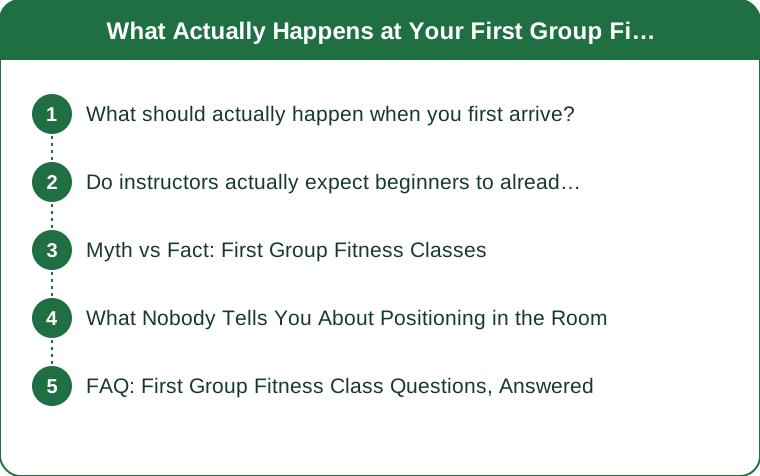
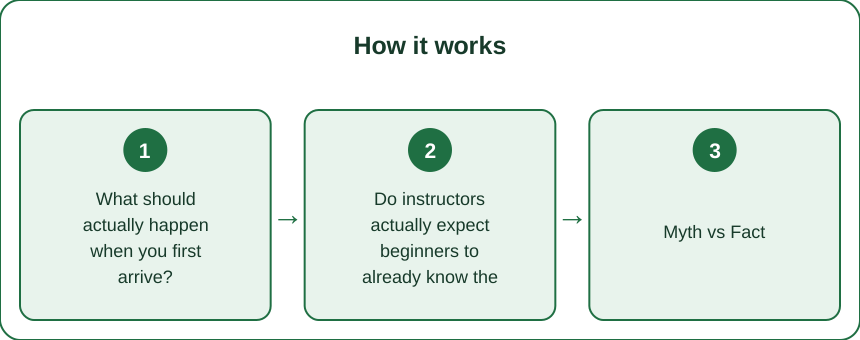
What should actually happen when you first arrive?
Most studios or gyms expect first-timers to check in at a front desk or with the instructor directly, often signing a brief waiver or filling out basic information if it’s a specialty studio — arriving 10-15 minutes early gives time for this without feeling rushed, and also time to ask the instructor about any modifications you might need.
Do instructors actually expect beginners to already know the moves?
No — experienced group fitness instructors are generally used to a mix of experience levels in any given class and typically call out modifications or simpler versions of moves as they go, without singling out or drawing attention to anyone specifically following the modified version.

Myth vs Fact: First Group Fitness Classes
Myth: everyone else already knows exactly what they’re doing. Fact: most classes have a mix of experience levels, and regulars were all first-timers once — the room is rarely as uniformly expert as it might feel from the doorway.
Myth: you need to keep up with the full-intensity version to get a real workout. Fact: modified versions of most moves still provide meaningful exercise, and pacing yourself appropriately in a first class is standard, sensible practice, not a sign of not belonging there.
Myth: showing up without knowing the specific format in advance is a problem. Fact: instructors expect to explain format basics briefly at the start of class, particularly for newcomers who identify themselves as first-timers.
What Nobody Tells You About Positioning in the Room
Standing toward the back or side of a class isn’t just about hiding — it also gives a clearer sightline to watch other participants and the instructor simultaneously, which many first-timers find genuinely helps with following along, rather than being a purely self-conscious choice.
FAQ: First Group Fitness Class Questions, Answered
Should I tell the instructor it’s my first class?
Yes — most instructors appreciate knowing, since it lets them check in on you specifically or point out modifications more directly during class.
What should I bring to a first class?
Water, a small towel, and any studio-specific gear (grip socks for some formats) covers most classes; checking the studio’s website or calling ahead clarifies anything format-specific.
Is it normal to feel like the pace is too fast at first?
Yes — first classes often feel faster than they will once you’re familiar with the format and moves, since unfamiliarity itself adds to the perceived pace; this typically eases by the second or third class.
TL;DR:
- Arriving 10-15 minutes early covers check-in and orientation without feeling rushed
- Instructors expect a mix of experience levels and generally offer modifications routinely
- Standing toward the back gives a clearer view of both instructor and other participants
- The unfamiliar pace of a first class typically eases within the first few sessions
Knowing the actual sequence of a first class in advance tends to remove more anxiety than any amount of physical preparation.
See It in Motion
Seen here: Yoga Jogger Sweatpants with Pockets — shop it on bubblelime.com
Keep Reading
This article is for general informational purposes only and is not medical advice. It is not a substitute for professional diagnosis or treatment. Always consult a qualified healthcare provider about your individual situation, especially before making significant changes to your diet or exercise routine.