The One Thing First-Timers Get Wrong About Group Fitness Classes
Quick Answer: Regular class-goers are almost entirely focused on their own form, breathing, and keeping up with the instructor — not watching newcomers — a pattern well-documented in social psychology as the ‘spotlight effect,’ where we drastically overestimate how much others notice us.
The fear of being watched keeps a lot of people from ever walking into their first group class. The actual experience is almost always less exposed than the anticipation.
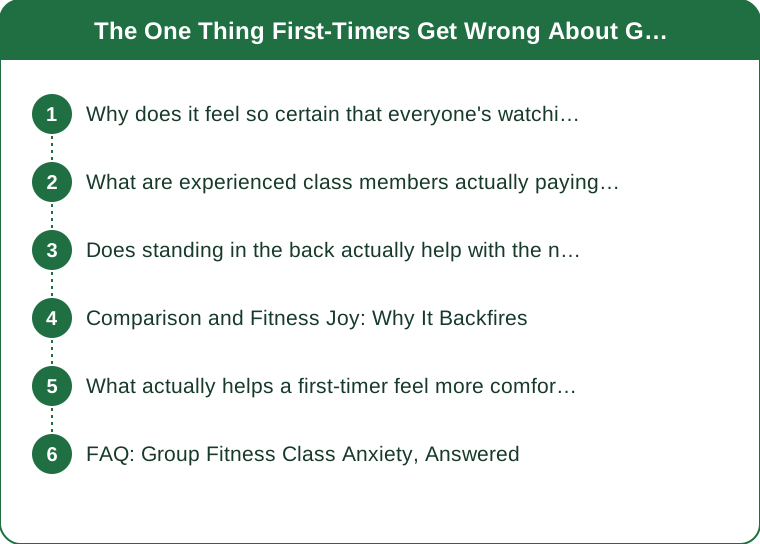
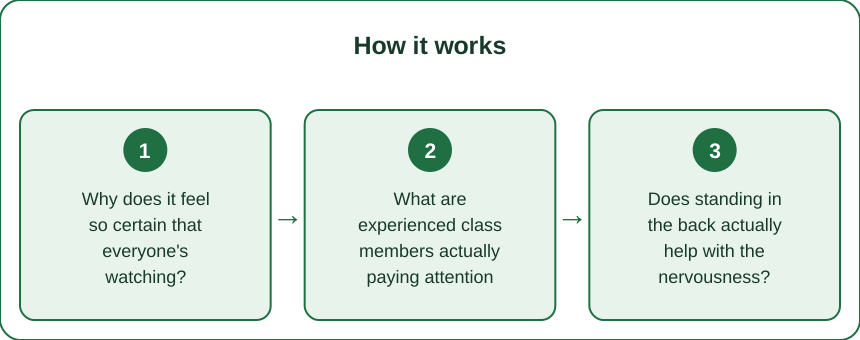
Why does it feel so certain that everyone’s watching?
This is a well-studied pattern called the spotlight effect — people consistently and significantly overestimate how much others notice their appearance, mistakes, or performance in a group setting. In group fitness specifically, everyone else is managing their own coordination and effort, which leaves very little attention left over to track a stranger’s form.
What are experienced class members actually paying attention to?
Mostly the instructor, their own breathing, and their own next move — regulars are focused on hitting their own reps, following cues, and managing their own fatigue. Class is, for almost everyone in the room, an internally-focused experience, not a social evaluation.
Does standing in the back actually help with the nervousness?
It can help psychologically, though it’s not necessary for actual anonymity — you’re just as unwatched in the front row as the back. That said, if standing toward the back reduces your own anxiety enough to focus on the workout instead of your nerves, it’s a completely reasonable choice for a first few classes.
Comparison and Fitness Joy: Why It Backfires
Comparing your form, pace, or fitness level to others in class tends to reduce enjoyment and increase dropout risk, according to exercise psychology research, regardless of whether the comparison is ‘favorable’ or not. Instructors consistently report that students who focus on their own progress, rather than others in the room, stick with classes longer and report higher satisfaction.
What actually helps a first-timer feel more comfortable?
Arriving a few minutes early to talk briefly with the instructor about being new, letting them know, tends to reduce anxiety significantly — instructors are used to this and often offer quiet modifications or encouragement specifically because they know it’s a first class. Most studios also welcome new students warmly precisely because retention depends on that first experience going well.
FAQ: Group Fitness Class Anxiety, Answered
Is it okay to modify moves as a beginner in a group class?
Absolutely — modifying is completely normal and expected; instructors build classes assuming a range of fitness levels will be present.
How many classes does it usually take to feel comfortable?
Most people report feeling noticeably more comfortable by the third or fourth class, once the format and flow become familiar.
Should you tell the instructor you’re a first-timer?
Yes, generally — it’s brief, low-stakes, and it lets them offer relevant modifications or encouragement specifically for you.
TL;DR:
- The spotlight effect makes us overestimate how much others notice us in group settings
- Regulars are focused on their own form and the instructor, not on newcomers
- Comparing yourself to others reduces enjoyment more than it motivates
- Letting the instructor know you’re new tends to ease first-class anxiety significantly
The room is far less focused on you than it feels — most people are just trying to keep up with their own workout.
See It in Motion
Keep Reading
This article is for general informational purposes only and is not medical advice. It is not a substitute for professional diagnosis or treatment. Always consult a qualified healthcare provider about your individual situation, especially before making significant changes to your diet or exercise routine.