How to Overcome Gymtimidation: A Plan for the First Ten Minutes
Quick Answer: Gymtimidation peaks in the first ten minutes and drops sharply once you are physically doing something, so the fix is to remove every decision from that window. Know your first exercise before you arrive, go straight to it, and give yourself permission to leave after twenty minutes. A written three-move plan, a known route from the door to your first station, and headphones handle roughly 80 percent of the feeling - not because the anxiety is fake, but because it is fed by standing still with unmade decisions.
Nobody is anxious in the middle of set three. The anxiety lives in the doorway, in the changing room, and in the thirty seconds of standing near the equipment trying to look like you know where you are going.
So build a plan for those ten minutes specifically, and let the rest take care of itself.

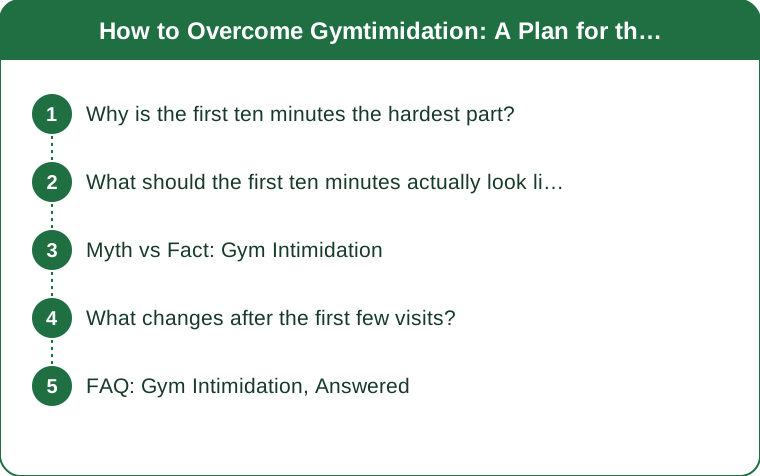
Why is the first ten minutes the hardest part?
Because standing still with no task is the worst possible state. Anxiety needs somewhere to go, and a body with no assigned action gives it the whole room. The moment you are physically executing something, the available attention drops dramatically.
Decisions multiply exactly when you are least equipped to make them. Which machine, is it free, how do I adjust it, is that person using it, where do I put my bag. Every one of those is small; together, in a state of heightened arousal, they are the actual barrier.
The changing room is often worse than the gym floor. It is a confined space with people in various states of routine, and it comes before you have any momentum. Many people who describe gym anxiety are describing changing room anxiety and have never separated the two.
You have not yet learned the room, so everything reads as a rule you might be breaking. Regulars move with certainty because they know where the wipes are and which bench is always free at this hour. New attendees read that certainty as a competence gap rather than as accumulated trivia.
Being observed feels far more likely than it is. The research on this is fairly consistent: people significantly overestimate how much others notice and evaluate them. Most gym-goers are managing their own set, their own rest timer, and their own reflection.
And the first visit sets a story you then have to overcome. A bad first ten minutes becomes the memory attached to the entire building, which is why fixing that specific window matters more than fixing anything about the workout itself.
What should the first ten minutes actually look like?
Write three exercises down before you leave the house. Not a programme, not a split - three movements, in order, with a set and rep number beside each. The written list is what converts an intimidating room into a to-do list.
Pick a first exercise that needs no equipment negotiation. A treadmill, a stationary bike, a mat, or a dumbbell rack. Anything with plentiful stations and no queue means your first decision has no failure mode.
Know your route from the door. On day one, walk in, go directly to that first station, and start. Do not tour the room, do not scan for a locker for five minutes, do not stand at the entrance to assess. Momentum is the whole strategy.
Arrive dressed if the changing room is the hard part. This eliminates the worst room in the building on the days when it is the barrier. It is not a workaround to be embarrassed about - a huge number of regulars do exactly this.
Set a permission to leave at twenty minutes. Genuine permission, not a bluff. Knowing you can leave removes the sense of being trapped, and in practice most people stay, because the hard part was already over at minute four.
Put headphones on before you go through the door. They create a small private space, remove ambiguity about whether you might be spoken to, and give your attention something to do during the transitions between exercises.
And go at an off-peak hour for the first two weeks. Mid-morning or early afternoon on a weekday is a fundamentally different building from 6pm. Learning the room when it is quiet is not avoidance, it is sequencing.

Myth vs Fact: Gym Intimidation
Myth: Everyone is watching you. Fact: people consistently overestimate how much they are noticed and judged. Most people in a gym are focused on their own set, their own rest period, and their own timer.
Myth: You need to know what you are doing before you go. Fact: three exercises written on your phone is a sufficient plan for the first month. Programme optimisation is a problem for people who already attend.
Myth: The staff will judge you for asking. Fact: showing someone how a machine adjusts is the most routine thing a gym employee does. It takes ninety seconds and they will not remember it by lunchtime.
Myth: You should start with a class to build confidence. Fact: classes work brilliantly for some people and are considerably more exposing for others, because you cannot leave and you cannot self-pace. There is no universal easier option here.
Myth: The feeling means you should not be there. Fact: the feeling is extremely common, it drops sharply with familiarity, and it is not information about whether you belong. It is information about novelty.
Myth: It will take months to feel comfortable. Fact: for most people the acute version fades within three to six visits, largely because the room stops being unfamiliar. The timeline is shorter than the dread suggests.
What changes after the first few visits?
The room stops generating decisions. By visit four you know where the wipes are, which bench is usually free, and which door leads where. That knowledge is most of what confidence actually consists of.
You will have been the person someone else asked. Once you have answered a question about whether you are using a bench, the whole social dynamic reframes - you are part of the room’s traffic, not an observer of it.
The plan can grow. Three exercises becomes five, then a proper structure. Building the habit first and the programme second is the order that survives; the reverse rarely does.
September will make the room busier, and that helps more than it hurts. The autumn intake means a meaningful proportion of the people around you are also new, also unsure, and also following a written list on their phone.
The changing room stops being an event. Usually because you stop noticing it, which is what happens to every space you enter regularly.
And the twenty-minute permission stops being needed. Keep it anyway. On the days when everything is hard, a twenty-minute session you actually attend beats a sixty-minute session you skip.
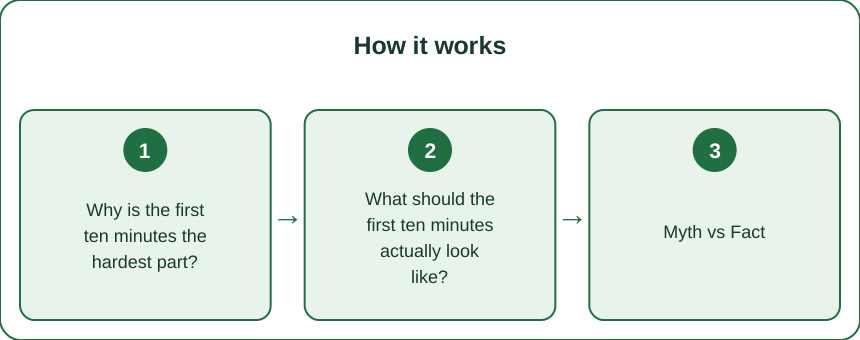
FAQ: Gym Intimidation, Answered
How do I overcome gymtimidation on my first visit?
Write down three exercises before you leave, choose a first exercise with plentiful equipment, go straight to it without touring the room, wear headphones, and give yourself genuine permission to leave after twenty minutes.
What is the best time to go to the gym if I am nervous?
Mid-morning or early afternoon on a weekday. The building is quieter, equipment is free, and you can learn the layout without any pressure. Move to busier hours once the room is familiar.
Is it normal to feel anxious about the gym?
Very. It is one of the most commonly reported barriers to starting, and it typically fades substantially within three to six visits as the environment becomes familiar rather than novel.
Should I ask staff for help?
Yes. Showing someone how a machine adjusts is a routine part of the job and takes about ninety seconds. It is the fastest way to remove the equipment uncertainty that drives most of the anxiety.
What if I only manage twenty minutes?
Then you did the thing. Consistency at twenty minutes builds the habit that eventually supports longer sessions; a perfect hour you keep postponing builds nothing.
TL;DR:
- Gym anxiety concentrates in the first ten minutes, when you are standing still with unmade decisions - not during the actual exercise.
- Write three exercises down before you leave, pick a first one with plentiful equipment, and go straight to it without touring the room.
- Arrive already dressed if the changing room is the harder part, and wear headphones from the door.
- Give yourself genuine permission to leave at twenty minutes; most people stay, because the hard part passed at minute four.
- Go off-peak for the first two weeks, then let the room become familiar - for most people the acute feeling fades within three to six visits.
The plan is not for the workout. The plan is for the doorway.
See It in Motion
Seen here: Super High Waist Embossed Yoga Leggings with Inner Pocket — shop it on bubblelime.com
Keep Reading
This article is for general informational purposes only and is not medical advice. It is not a substitute for professional diagnosis or treatment. Always consult a qualified healthcare provider about your individual situation, especially before making significant changes to your diet or exercise routine.