How to Read a Gym Class Schedule When the Names Mean Nothing
Quick Answer: Ignore the names and sort every class into one of four buckets: strength, cardio, mind-body, or dance. Then use the reliable keyword tells - HIIT, Power, and Bootcamp mean high intensity; Flow, Restore, and Stretch mean low; Sculpt, Tone, and Barre mean light weights and high reps; anything with Express is 30 minutes. When in doubt, the front desk will answer the question the schedule refuses to: what does this class actually involve, and is it okay for a first-timer? It always is.
Somewhere between BodyBlast Fusion and Cardio Sculpt Rhythm, the schedule stops being information and becomes a mood board. This is not your reading comprehension failing. Class names are written to sound exciting, not to tell you what happens in the room - and the decoding skill takes about five minutes to learn.

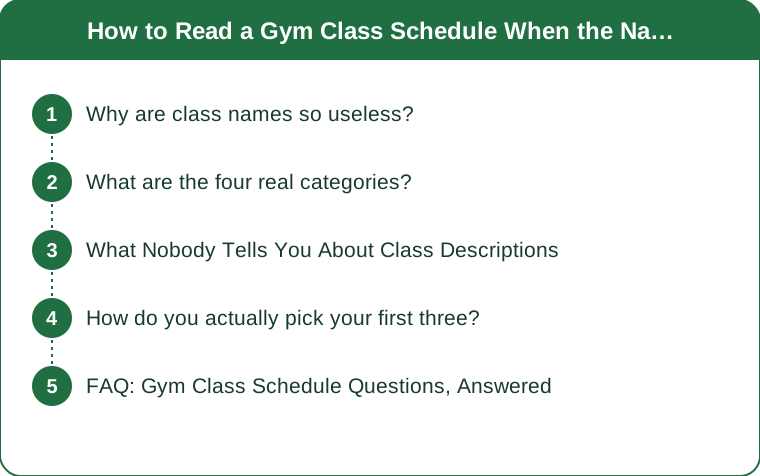
Why are class names so useless?
Because they are doing a different job than you think.
Names are marketing first. A class called Moderate Intensity Circuit With Dumbbells is honest and sells four spots. The same class called Ignite sells twenty. Studios know this, so every schedule inflates toward drama - Shred, Blast, Inferno, Warrior - regardless of what the hour contains.
Branded formats add a second layer of fog. Some names are licensed programs with fixed structures - the various trademarked pump, combat, and dance formats run nearly identically worldwide. Useful once you know them, meaningless the first time you see them. There is no way to deduce from the name alone that one trademark means barbells and another means choreography.
The same word means different things at different gyms. Sculpt at one studio is light dumbbells and high reps. At a yoga studio, Sculpt is yoga with weights in a heated room. Pilates Sculpt, Beach Sculpt, and Cardio Sculpt share one word and almost nothing else. The word has no fixed meaning - it is seasoning.
And difficulty labels are aspirational. All Levels mostly means the instructor will offer modifications, not that the base class is easy. Beginner-Friendly means the same. A genuinely beginner-paced class is rare and usually says Intro, Foundations, or Basics - those three words are the most trustworthy on any schedule.
The good news: underneath the branding, there are only about four kinds of class, and every name on the board is one of them wearing a costume. Sort first, decode second, and the schedule turns back into information.
What are the four real categories?
Every class on every schedule is one of these, or a hybrid of two.
1. Strength. You move against resistance - dumbbells, barbells, bands, or your own body - to get stronger. Tells in the name: Pump, Strength, Lift, Sculpt, Tone, Barre, Body anything. The sub-split that matters: heavier-weight lower-rep classes (Pump, Strength) build strength fastest, while light-weight high-rep classes (Sculpt, Barre, Tone) burn and shake but are gentler to walk into. Both are legitimate; they feel completely different.
2. Cardio. The point is elevated heart rate. Tells: Spin, Cycle, HIIT, Bootcamp, Circuit, Burn, Blast, Step, Tread. The sub-split: steady classes (a rhythm cycling class) let you hide and pace yourself; interval classes (HIIT, Bootcamp) alternate hard pushes with rest and feel spikier. Interval classes are also where the intimidating names cluster, which is worth knowing because the actual rooms are friendlier than the fonts.
3. Mind-body. Movement quality, mobility, balance, and downshifting. Tells: Yoga, Pilates, Flow, Stretch, Restore, Mobility, Mat. Sub-split: some are genuinely gentle (Restore, Yin, Stretch) and some are sneaky workouts (Power Flow, hot classes, reformer Pilates). Heat is always disclosed - look for the word Hot or a temperature.
4. Dance. Choreography you follow for the joy of it, cardio as a side effect. Tells: Dance, Rhythm, Groove, Latin, Hip Hop, or any music genre in the name. The only skill required is tolerance for missing steps, which everyone in the room is also doing.
Hybrids advertise themselves with Fusion, Cross, or two nouns jammed together - Yoga Sculpt, Cardio Barre. Read them as: the first word’s category, with the second word’s flavor mixed in.

What Nobody Tells You About Class Descriptions
The instructor matters more than the format. The same class name at the same gym is a different experience on Tuesday than Thursday because a different human runs it. Regulars follow instructors, not slots. If a class disappoints, try the format once more with someone else before writing it off - and if an instructor delights you, try their other classes even in categories you assumed were not for you.
Class length is information. A 30-minute Express class is the most beginner-friendly object on any schedule regardless of its name - whatever happens, it happens for 30 minutes. A 75-minute class assumes an audience that already knows it wants 75 minutes.
Time slot predicts the room’s vibe. The 6am crowd is quiet, efficient, and self-contained. The 9:30am weekday crowd is social and unhurried. The 6pm crowd is big, energetic, and anonymous - the easiest room to disappear into, which for a first class is often exactly the appeal. Saturday 10am is the packed flagship hour; late August weekday mornings, before the September rush arrives, are the emptiest and gentlest weeks of the year to start.
You can ask the desk what a name means, and it is a normal question. The front desk answers is this okay for a first-timer a dozen times a week. The answer is essentially always yes, plus something useful the schedule never said - bring a towel, the bikes need setting up early, this instructor loves burpees.
Nobody in the room knows it is your first class unless you announce it. Wear whatever you can move in - leggings and a tee are the uniform everywhere - stand anywhere but the front row, and you are indistinguishable from a regular having a quiet day. The self-consciousness is real and it is also entirely unreciprocated; everyone else is watching the instructor or the clock.
How do you actually pick your first three?
With a sampler strategy, not a soulmate search.
Book three different categories in week one or two. One strength-flavored, one cardio-flavored, one mind-body or dance - chosen by schedule convenience, because the class you can actually get to beats the perfect class at an impossible hour. The goal is calibration, not commitment: after three different rooms you know things about yourself no schedule could have told you.
Apply the beginner filters to each pick:
- Prefer names containing Intro, Foundations, Basics, or Express.
- Prefer 30 to 45 minutes over 60 to 75.
- Avoid, for now, names containing Advanced, Power, Competition, or a Roman numeral.
- Heated classes are a later experiment, especially in August.
Arrive ten minutes early for the first one. Tell the instructor it is your first time - one sentence, hugely high-yield. They will show you the equipment setup, suggest starting weights, and quietly check on you mid-class. This single habit removes about half the actual difficulty of being new.
Judge the class by the right question afterward. Not was I good at it - you were new; being unpolished was the only possibility. The question is: would going back feel better or worse than the first time? Better means the format has legs. Worse means try the next category, having lost nothing but an hour.
Then repeat the winner once before expanding. The second visit to the same class is where the magic is - the format is familiar, the instructor may greet you, and you can feel yourself measurably less lost. That feeling, class two of the same thing, is the actual beginning of being a person who goes to classes.
And hold the whole thing lightly. The schedule will still be there next month. Every regular in every room was once squinting at the same board wondering what Fusion meant.
FAQ: Gym Class Schedule Questions, Answered
What do gym class names like Sculpt and Burn actually mean?
Sculpt and Tone almost always mean light weights with high repetitions; Burn, Blast, and Shred signal cardio intervals; Pump and Strength mean real resistance work; Flow, Restore, and Stretch mean gentler mind-body classes. The words are marketing seasoning on four basic categories - strength, cardio, mind-body, and dance - and the front desk will confirm which one any class is.
Which gym class is best for a complete beginner?
Anything titled Intro, Foundations, or Basics is designed for you, and 30-minute Express classes are the friendliest format regardless of name. Among regular classes, steady-pace options like a rhythm cycling class or a gentle yoga class let you control your own effort more easily than interval formats.
Does All Levels really mean all levels?
It means modifications will be offered, not that the class is easy. A fit regular and a first-timer take the same All Levels class at very different intensities. It is genuinely doable for beginners, but expect to use the modified versions and rest when you need - both of which are normal and expected.
What should I wear to my first group fitness class?
Whatever you can move and sweat in - leggings or shorts and a tee is the answer in every room, with grippy socks for reformer Pilates and barre the only special case. Supportive shoes for anything cardio, bare feet or socks for yoga. Nothing about your outfit will mark you as new.
TL;DR:
- Class names are marketing; every class is really strength, cardio, mind-body, or dance.
- Trust the honest words: Intro, Foundations, Basics, Express. Side-eye Shred, Inferno, Advanced.
- Sculpt means light weights and high reps; HIIT and Bootcamp mean intervals; Hot means heated, always disclosed.
- Sample all three main categories in convenient time slots, then repeat the best one.
- One sentence to the instructor - first time here - removes half the difficulty of being new.
The board was never a test. It is four kinds of class wearing twenty costumes, and now you can see through all of them.
See It in Motion
Seen here: Super High Waist Embossed Yoga Leggings with Inner Pocket — shop it on bubblelime.com
Keep Reading
This article is for general informational purposes only and is not medical advice. It is not a substitute for professional diagnosis or treatment. Always consult a qualified healthcare provider about your individual situation, especially before making significant changes to your diet or exercise routine.