Overcoming Gym Intimidation: How to Walk In and Own Your Space
Quick Answer: The fastest way to overcome gymtimidation is to remove the unknowns before you walk in: go off-peak (mid-morning or early afternoon on a weekday), arrive with a written 4-exercise plan, and start on machines or free weights you already understand. Give it three visits — that’s usually all it takes for the room to stop feeling like a test. Nobody is watching you; they’re counting their own reps and looking at themselves in the mirror.
You’ve paid for the membership. You have the shoes. And you’ve now driven past the building twice without going in, because the free weight area looks like a room where everyone else got a manual you didn’t.
That feeling has a name — gymtimidation — and it’s shockingly common. It’s also, unusually for a fear, one that dissolves on a predictable schedule.

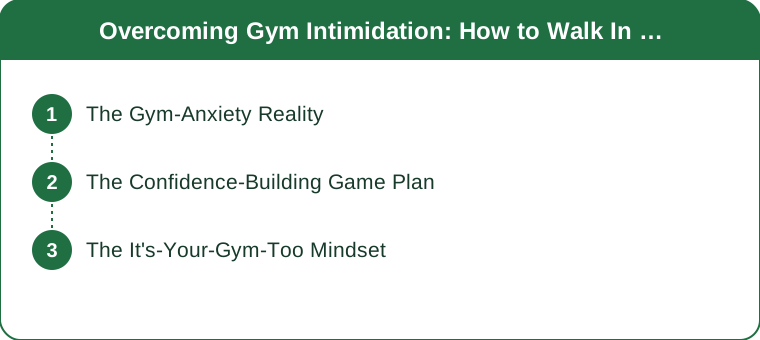
Why does the gym feel so intimidating?
Because three specific fears stack up, and none of them is about fitness.
Not knowing what to do. The equipment is unfamiliar, the etiquette is unwritten, and there’s no obvious place to start. This is a genuine information problem, and it’s the one that’s easiest to fix.
Being watched. This is the spotlight effect — a well-documented tendency to dramatically overestimate how much other people notice us. In a gym, it’s almost comically wrong: everyone is counting reps, watching a rest timer, or checking their own form in the mirror. The person you’re convinced is judging your squat is thinking about their own.
Not belonging. The fear that gyms are for people who already look a certain way. Worth saying plainly: every single regular in that room was once a beginner who didn’t know how to adjust a seat.
And the reassuring part — it fades fast. Not over years. Over about three visits, as the room stops being unfamiliar and starts being a place where you know where the water fountain is. Intimidation is mostly unfamiliarity wearing a costume.

What’s the game plan for your first few visits?
Eight moves, in the order you’d actually use them.
- Have a written plan. Four exercises, sets and reps, on your phone. The single biggest source of gym anxiety is standing in the middle of the floor with no idea what’s next — and a plan eliminates it entirely. Example: leg press 3×10, seated row 3×10, dumbbell press 3×10, 10 minutes on a bike.
- Go off-peak first. Weekday mid-morning or 1–3pm. Avoid 6–8am and 5–7pm for the first couple of weeks. A half-empty gym is a completely different building.
- Take the tour and ask for a walkthrough. Most gyms include one free session, and almost nobody uses it. Twenty minutes with a staff member covering how the machines adjust is the highest-leverage thing on this list.
- Start with what you already know. Machines have diagrams and fixed paths — they’re the beginner’s friend. Treadmill, bike, leg press, seated row, lat pulldown. Add free weights when you want to, not as a test of legitimacy.
- Learn a few things from home. Two or three YouTube videos on the exercises in your plan means you arrive knowing what the movement looks like.
- Headphones on. They’re a legitimate social shield, and they narrow the room to you and your set.
- Wear what makes you feel comfortable. Not what you think a gym outfit should be. Feeling self-conscious about your clothes adds a whole second layer of anxiety you don’t need.
- Go regularly, even briefly. A 20-minute visit three times a week builds familiarity faster than one perfect 90-minute session. Familiarity is the actual cure here.
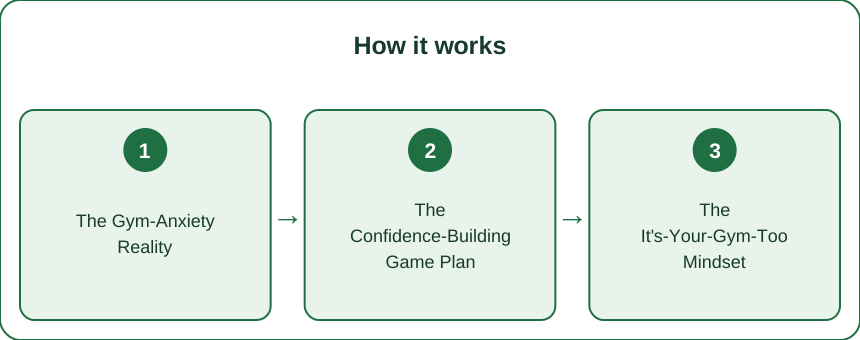
How do you get to “this is my gym too”?
The mindset side, which matters as much as the tactics.
You have exactly as much right to be there as anyone. Same membership, same fee, same room. The strongest person there is not more entitled to the equipment than you are.
Everyone is genuinely absorbed in themselves. Once you accept this, it’s freeing rather than disappointing. Nobody remembers your set. Nobody will remember it tomorrow, either.
Drop the comparison. The person lifting three times your weight is on year six. Comparing your first month to someone’s sixth year isn’t humility, it’s just bad math.
Showing up is the win. Progress over perfection — a session where you did two exercises and left counts completely.
And find your fit. If a particular gym genuinely feels hostile, that’s information about the gym, not about you. Big-box gyms, women’s-only gyms, small studios, community centers and YMCAs all have very different atmospheres. Trial a few. The right environment makes the whole thing easier.
Confidence follows action, not the other way around. You don’t wait to feel ready and then go — you go, and the readiness shows up somewhere around visit four.
5 Mistakes Everyone Makes When Gym Anxiety Hits
- Waiting until you’re “in better shape” to join. This is the loop that costs people years. The gym is where you get in shape; it’s not the entrance requirement.
- Going at peak hour on day one. 6pm on a Monday is the worst possible introduction. Off-peak is not cheating.
- Arriving without a plan and improvising. Twenty minutes of wandering makes anyone feel like they don’t belong.
- Never asking for help. Staff and trainers are there precisely for this, and most regulars are genuinely happy to say “yeah, I’m done with that, go ahead.” Asking is normal.
- Quitting after two visits. The third mistake is the most common, but this one is the most costly — most people quit right at the point where the room was about to become ordinary.
Mini FAQ
How long does gym intimidation last?
For most people, the sharpest anxiety drops after three or four visits, and it’s largely gone within a month of consistent attendance. The variable is frequency, not duration — three short visits a week beats one long one, because familiarity is what’s actually being built.
What’s the best time to go if I’m nervous?
Weekday mid-morning (roughly 10am–noon) or early afternoon (1–3pm) are the quietest windows at most gyms. If you can only go in the evening, aim for after 8pm rather than the 5–7pm crush. Weekend mornings are busier than people expect.
What if I don’t know how to use a machine?
Read the diagram on the frame — almost every machine has one showing the movement and which muscles it works. If it’s still unclear, ask a staff member; it takes them 30 seconds and it’s literally their job. Nobody in the history of gyms has been thought less of for asking how a seat adjusts.
TL;DR:
- Gym anxiety is common and fades in about 3–4 visits.
- The spotlight effect is real: nobody is watching you.
- Arrive with a written 4-exercise plan — it removes the biggest anxiety trigger.
- Go off-peak for the first couple of weeks.
- Start with machines and familiar movements; add free weights when you want to.
- Use the free intro session, wear what feels comfortable, and show up short but often.
Have a plan, learn the ropes off-peak, and walk in like you belong — because you do.
See It in Motion
Seen here: High Waist 8” Yoga Shorts — shop it on bubblelime.com
Keep Reading
This article is for general informational purposes only and is not medical advice. It is not a substitute for professional diagnosis or treatment. Always consult a qualified healthcare provider about your individual situation, especially before making significant changes to your diet or exercise routine.