Resting Without Guilt: The Skill Every Body Deserves
Rest arrives with a shadow: the guilt that narrates every recovery day as laziness, every nap as theft. The shadow ruins the rest — guilt-soaked recovery doesn’t recover. The deprogramming guide: where rest-guilt comes from, why it’s wrong on the science and the permissions that make rest work.

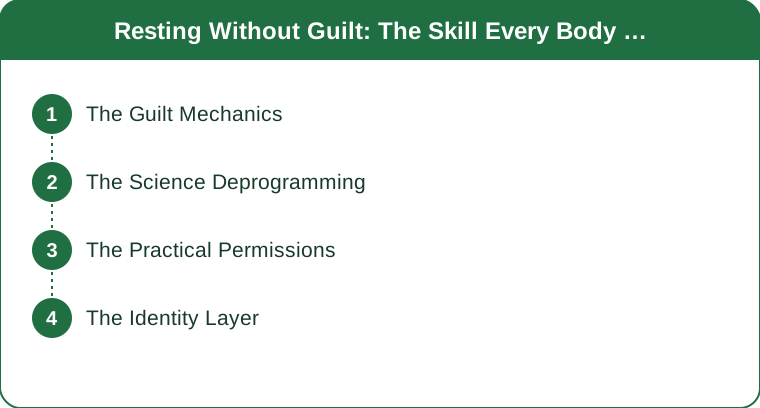
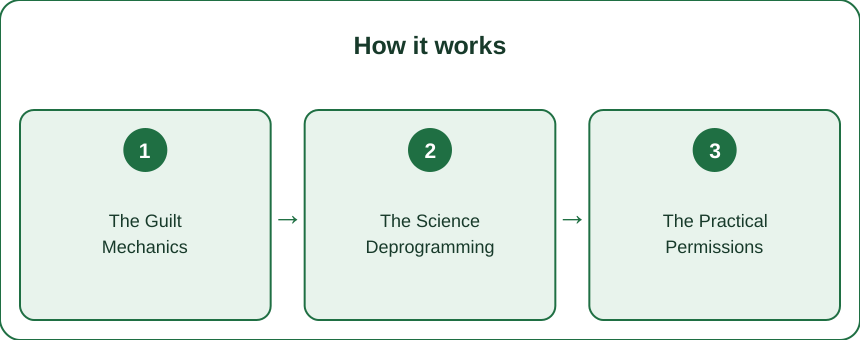
The Guilt Mechanics
Where the shadow comes from: the productivity-culture inheritance (worth measured in output makes rest feel like deficit — the grind-glorification that fitness culture imported wholesale; ‘no days off’ as identity), the visible-effort bias (training LOOKS like progress; adaptation is invisible — the rest day that builds the muscle photographs like nothing happening, so the brain files it as nothing), the comparison amplifier (the feed’s everyone-training-always illusion — the rest-day scroll through other people’s workouts is guilt’s delivery system), and the cost honesty (guilt-soaked rest fails at resting — the stress chemistry of feeling bad about recovering blocks the recovery; the shadow isn’t just unpleasant, it’s counterproductive).
The Science Deprogramming
The facts that dissolve the guilt: adaptation happens AT rest (the training-effect timeline is stimulus-then-recovery — the workout writes the request and rest fills the order; skipping rest skips results, which makes rest-guilt precisely backwards), the overtraining receipts (the plateaued, always-sore, worse-sleeping exerciser is under-recovered, not under-motivated — the overtraining-signs chapter is rest-guilt’s invoice), the performance evidence (the deload weeks and easy days that precede PRs — the fittest people rest ON PURPOSE, scheduled and unapologetic), and the bigger-life version (the burnout literature says the same about work — recovery is a productivity input everywhere; the guilt was always aimed at the wrong target).

The Practical Permissions
Making rest actually restful: the schedule-it-forward move (rest days planned into the week like sessions — the pre-decided rest that guilt can’t relitigate; ‘today is the rest day’ beats ‘am I being lazy?’ every time), the real-rest menu (the active-recovery walk, the yin class, the nap, the hobby hour — the energy-audit’s genuine-restoration list; and the fake-rest honesty — the guilty scroll rests nothing), the language swap (the internal narration upgraded — ‘recovering’ not ‘doing nothing’; ‘adaptation day’ for the literal-minded; words shape the guilt), and the body-trust practice (the tired-day audible — downgrading a planned session without a tribunal; the body’s signals as information, not accusations; the skill grows with use like every skill).
The Identity Layer
The deeper reframe: rest as self-respect (the body that trains hard deserves maintenance — the care-and-keeping frame that replaces the earn-your-rest economy; you don’t earn rest, you require it), the modeling effect (the household watches how you rest — the guilt-free recovery day teaches children and partners what sustainable looks like; rest-guilt is contagious and so is its absence), the seasons honesty (lives have high-output and low-output seasons — the training year and the human year both — and the low seasons aren’t failures; they’re winters, and winters grow springs), and the endgame (the exerciser still training at seventy rested well at forty — sustainability was always the elite strategy; the guilt was just noise on the long road). Rest well, guilt-free, on schedule: the skill that funds everything else.
Adaptation happens at rest, schedule it forward, narrate it kindly, trust the tired days. Rest-guilt is backwards science and borrowed culture — recovery is the training’s other half, no apology owed.
See It in Motion
Seen here: Racerback Tank Top - White — shop it on bubblelime.com
Keep Reading
This article is for general informational purposes only and is not medical advice. It is not a substitute for professional diagnosis or treatment. Always consult a qualified healthcare provider about your individual situation, especially before making significant changes to your diet or exercise routine.