Why Even Well-Intentioned Fitness Content Can Leave You Feeling Worse, Not Better
Quick Answer: Well-intentioned fitness content often assumes a shared starting point — certain mobility, certain access, certain body type — and when your actual starting point differs, the gap between the content and your reality reads as discouragement, even though nothing in the content was designed to make you feel that way.
The caption said something encouraging. The person in the video seemed genuinely kind. And still, closing the app left a heavier feeling than opening it did — which is a common, real reaction, not an oversensitive one.

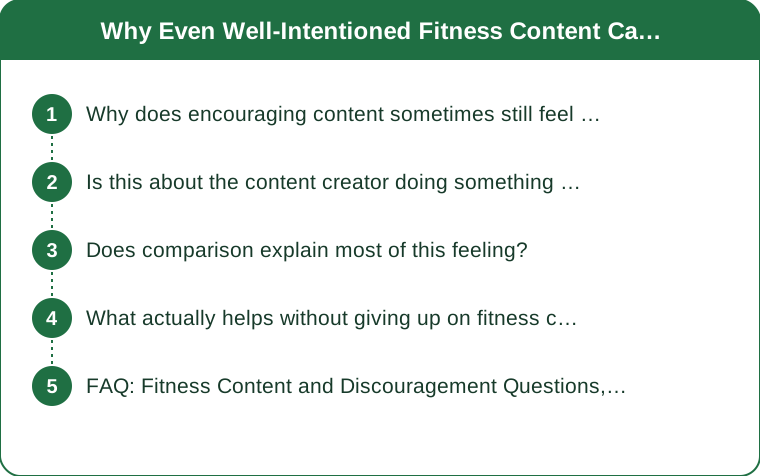
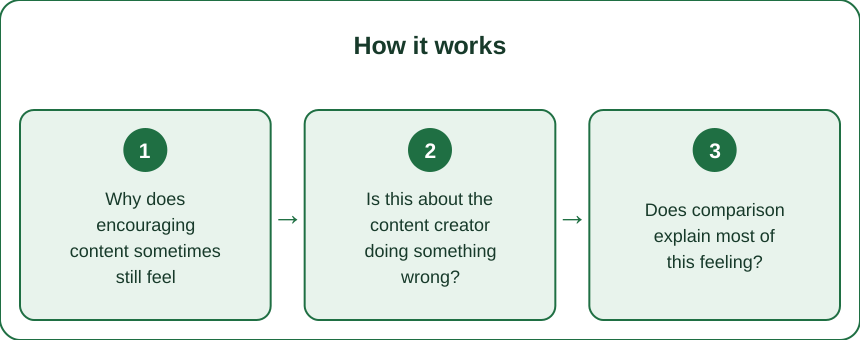
Why does encouraging content sometimes still feel discouraging?
Most fitness content assumes an unstated shared baseline — a certain fitness level, mobility range, or body type as the starting point for the demonstrated exercise — and when your own starting point is meaningfully different, the encouraging tone doesn’t close that gap, it just sits alongside it.
Is this about the content creator doing something wrong?
Usually not — the discouragement isn’t typically from any ill intent in the content itself, but from the mismatch between an assumed universal starting point and the actual diversity of starting points watching it, which is a structural gap in how fitness content tends to get made, not a personal failing on either side.

Does comparison explain most of this feeling?
Largely yes — even brief, incidental comparison (noticing a body type, a mobility level, an environment different from your own) triggers a measurable dip in mood, independent of whether the content intended any comparison at all.
What actually helps without giving up on fitness content entirely?
Actively seeking content that shows a wider range of starting points — modified versions, different body types, beginner-specific framing — reduces the gap-based discouragement, since it’s addressing the actual structural mismatch rather than just trying to feel differently about the same narrow content.
Noticing the specific moment a piece of content shifts from motivating to discouraging (usually right at a comparison point) also helps identify what to look for less of, rather than avoiding fitness content altogether.
FAQ: Fitness Content and Discouragement Questions, Answered
Is it normal to feel worse after watching motivational fitness content?
Yes — this is a common reaction tied to an assumed-baseline gap, not a sign of being overly sensitive or unmotivated.
Does this mean I should stop watching fitness content altogether?
Not necessarily — seeking out content that shows a wider range of starting points and body types tends to reduce the discouragement without requiring giving up the content entirely.
Is the content creator doing something wrong if their content has this effect?
Usually not intentionally — it’s more often a structural gap in how fitness content assumes a baseline, rather than any ill intent from the person making it.
TL;DR:
- Well-intentioned fitness content often assumes an unstated shared starting point
- The discouragement comes from the gap, not from any intended message in the content
- Even brief incidental comparison measurably affects mood, regardless of intent
- Seeking content showing a wider range of starting points reduces this gap-based effect
Feeling worse after ‘motivating’ content isn’t a personal failing — it’s a mismatch between an assumed baseline and your actual one, and it’s fixable by changing what you watch, not how you feel about it.
See It in Motion
Seen here: High Waist 8” Yoga Shorts — shop it on bubblelime.com
Keep Reading
This article is for general informational purposes only and is not medical advice. It is not a substitute for professional diagnosis or treatment. Always consult a qualified healthcare provider about your individual situation, especially before making significant changes to your diet or exercise routine.