Why Do Fitness Spaces Still Feel Intimidating Even After Body-Positive Messaging Became Mainstream?
Quick Answer: Body-positive messaging has changed marketing and social media, but many actual gym environments (mirror placement, equipment sized for one body type, unspoken social norms around who ‘belongs’) haven’t structurally changed at the same pace, so the gap between the message and the lived experience is what still creates intimidation, not a failure to internalize the messaging.
You’ve absorbed years of body-positive content, and the gym still makes your stomach drop at the door. That’s not a personal failure to ‘believe it enough’ — it’s a real gap between cultural messaging and the physical spaces that haven’t caught up.
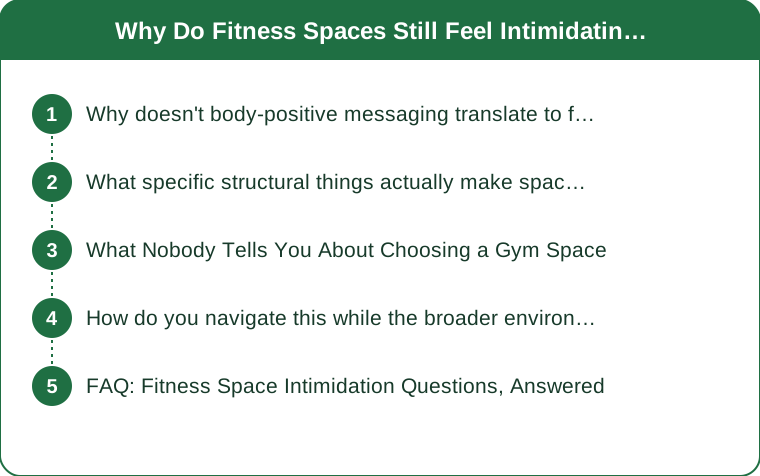
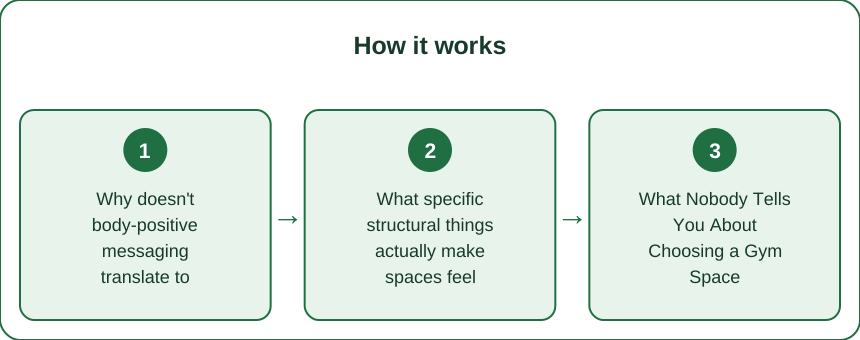
Why doesn’t body-positive messaging translate to feeling comfortable in gyms?
Messaging changes what people say and market; it doesn’t automatically redesign physical spaces or shift unspoken social norms — mirrors positioned to maximize self-consciousness, equipment weight ranges assuming one body type, and locker room layouts are structural, not messaging problems.
This mismatch means the intimidation isn’t really about internalizing a message better — it’s a legitimate response to an environment that hasn’t structurally caught up, which is a meaningfully different problem to solve.
What specific structural things actually make spaces feel unwelcoming?
- Wall-to-wall mirrors in every direction, which increase self-monitoring and self-consciousness regardless of body positivity beliefs
- Equipment weight ranges and machine sizing that don’t accommodate a range of body sizes comfortably
- Unspoken zone norms (certain areas implicitly ‘belonging’ to certain groups) that aren’t posted anywhere but are keenly felt
- Staff and trainer demographics that don’t reflect the diversity of members, subtly signaling who the space is ‘really for’

What Nobody Tells You About Choosing a Gym Space
Facilities increasingly vary a lot in how deliberately they’ve addressed this gap — some gyms have specifically redesigned around fewer mirrors, wider equipment ranges, and explicit inclusive programming, while others have only updated their marketing; visiting in person before committing reveals this far better than a website ever will.
Also underrated: the specific time of day you go changes the experience significantly — many people find off-peak hours feel less socially charged regardless of the space’s actual design, which is a practical lever within your control even at an imperfect gym.
How do you navigate this while the broader environment catches up?
Visit at different times before judging a space — a gym can feel completely different at 6am versus 6pm. Ask directly about body-diverse programming or trainer specialties rather than assuming from marketing alone. And notice which specific triggers are yours (mirrors, certain equipment, certain zones) so you can plan around them practically while the space itself evolves.
FAQ: Fitness Space Intimidation Questions, Answered
Is it me, or are some gyms actually more welcoming than others?
It’s genuinely both — real structural and cultural differences exist between facilities, so your discomfort isn’t purely internal.
Does a body-positive Instagram presence mean a gym has actually changed its physical space?
Not reliably — marketing and physical/structural reality don’t always match, which is why an in-person visit matters more than social content.
Will this intimidation feeling go away with time and repeated visits?
For many people it lessens with familiarity and finding the right specific space, though it’s a legitimate response to real environmental factors, not just a mindset to push through alone.
TL;DR:
- Body-positive messaging and actual gym design haven’t changed at the same pace
- Mirrors, equipment sizing, and unspoken zone norms are structural, not just messaging issues
- Facilities vary significantly in how much they’ve actually addressed this — visit in person
- Time of day and finding the right specific space are practical levers within your control
The intimidation is a reasonable response to a real gap — not a sign you haven’t absorbed the message.
See It in Motion
Seen here: High Waist Jogger Sweatpants with Pockets — shop it on bubblelime.com
Keep Reading
This article is for general informational purposes only and is not medical advice. It is not a substitute for professional diagnosis or treatment. Always consult a qualified healthcare provider about your individual situation, especially before making significant changes to your diet or exercise routine.