Why a Brand New Piece of Gym Equipment Still Feels Intimidating, Even After Months of Going
Quick Answer: Feeling intimidated by unfamiliar gym equipment isn’t just a beginner problem — it happens to experienced gym-goers too, because the discomfort comes from the visible learning curve of trying something new in a public space, not from a lack of general fitness experience, and it responds best to a specific low-pressure approach rather than “just getting more confident” over time.
If you’ve been going to the gym for months and still avoid certain machines, that’s a completely normal response, not a sign you’re behind where you should be.

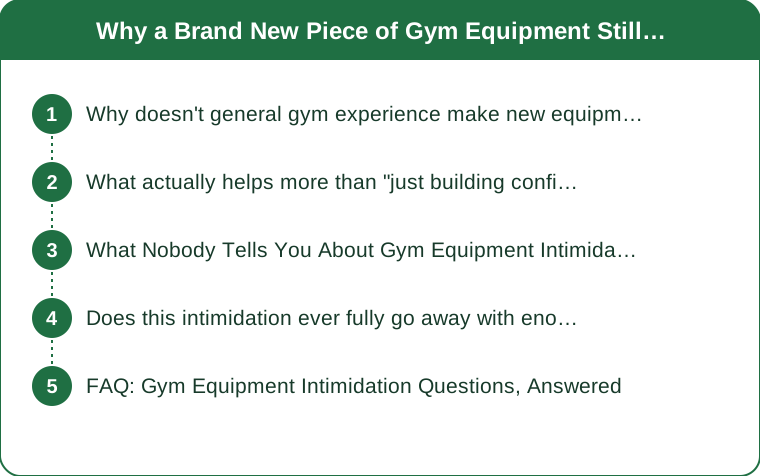
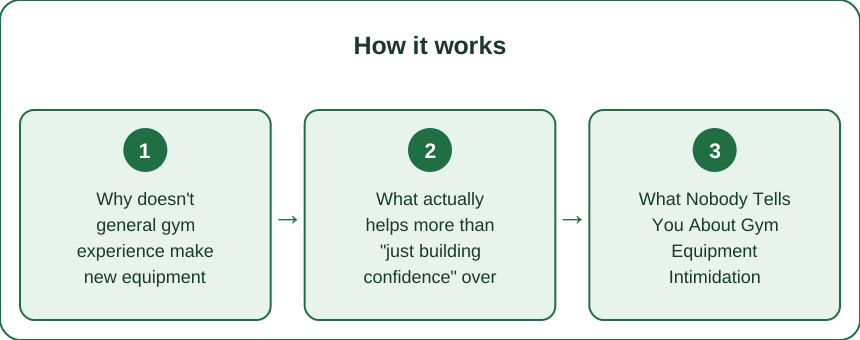
Why doesn’t general gym experience make new equipment feel less intimidating?
General gym confidence comes from familiar movement patterns — you know how your body handles a squat rack or a treadmill because you’ve repeated it many times. A completely new machine resets that familiarity to zero regardless of your overall fitness level, and the visible, public nature of trying it for the first time (potential mis-steps, unfamiliar adjustments) is what actually drives the discomfort, not your fitness itself.
This is why even people who’ve trained for years can feel a jolt of the same beginner-style hesitation in front of one specific unfamiliar machine.
What actually helps more than “just building confidence” over time?
Watching a short tutorial video before approaching the machine (rather than figuring it out in real time at the gym) removes most of the visible trial-and-error that causes the discomfort. Going during off-peak hours for a first attempt also reduces the audience effect significantly, since there’s simply less observation pressure when the gym floor is quieter.

What Nobody Tells You About Gym Equipment Intimidation
Nobody tells you that most other gym-goers are far too focused on their own workout to closely watch someone else figure out a machine — the sense of being watched is usually much stronger than the reality. Nobody mentions that gym staff genuinely expect and welcome equipment questions, and asking is both normal and typically appreciated rather than seen as a sign of inexperience.
Does this intimidation ever fully go away with enough gym experience?
For most people, it lessens significantly but doesn’t disappear entirely — each new piece of equipment resets the feeling somewhat, though experienced gym-goers typically recover their comfort much faster (within one or two attempts) than true beginners do. The goal realistically isn’t eliminating the feeling permanently, but getting faster at moving through it each time it shows up.
FAQ: Gym Equipment Intimidation Questions, Answered
Is it okay to ask gym staff to demonstrate a machine before using it?
Yes, absolutely — most gyms expect and encourage this, and staff demonstrating equipment use is a normal part of their role, not an imposition.
Does watching other people use a machine first actually help?
Somewhat, yes — observing correct form and setup from a short distance can reduce uncertainty, though a tutorial video beforehand is usually more thorough and less socially awkward than staring at another gym-goer.
Should you avoid unfamiliar equipment entirely if it consistently causes anxiety?
Not necessarily — a gradual approach (watching a video, trying it during off-peak hours, asking staff) usually resolves the anxiety faster than avoidance, which tends to make the equipment feel more intimidating over time rather than less.
TL;DR:
- Equipment intimidation resets with each new machine, regardless of overall gym experience
- The discomfort is about visible trial-and-error, not a lack of fitness ability
- Watching a tutorial beforehand and going during off-peak hours both genuinely help
- Most other gym-goers are far too focused on their own workout to closely watch you
This feeling is a normal, common response to novelty in a public space — not a sign you don’t belong there.
See It in Motion
Seen here: High Waist Embossed Yoga Leggings with Side Pockets — shop it on bubblelime.com
Keep Reading
This article is for general informational purposes only and is not medical advice. It is not a substitute for professional diagnosis or treatment. Always consult a qualified healthcare provider about your individual situation, especially before making significant changes to your diet or exercise routine.