Why Gym Mirrors Make Some People Feel Worse (Even Ones Who Like How They Look)
Quick Answer: It’s usually not a body image problem. Research on self-focused attention shows that directing attention at yourself increases critical self-evaluation regardless of how you actually look. A mirror does that continuously, while you’re red-faced and mid-effort. The discomfort is mechanical, not personal.
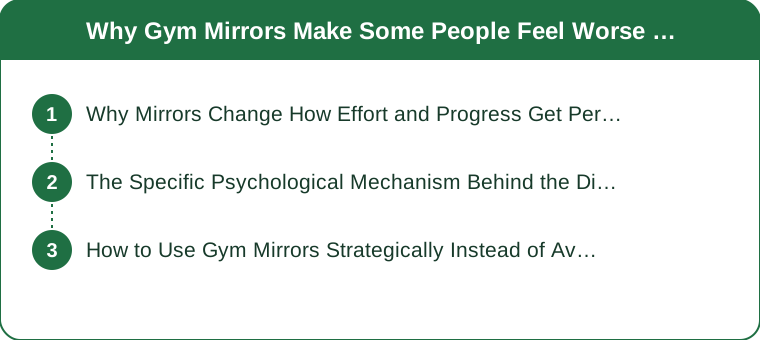
Plenty of people who are perfectly comfortable with how they look still avoid the mirrored wall. That’s the part the usual advice can’t explain.
If it were about appearance, liking your appearance would fix it. It doesn’t.
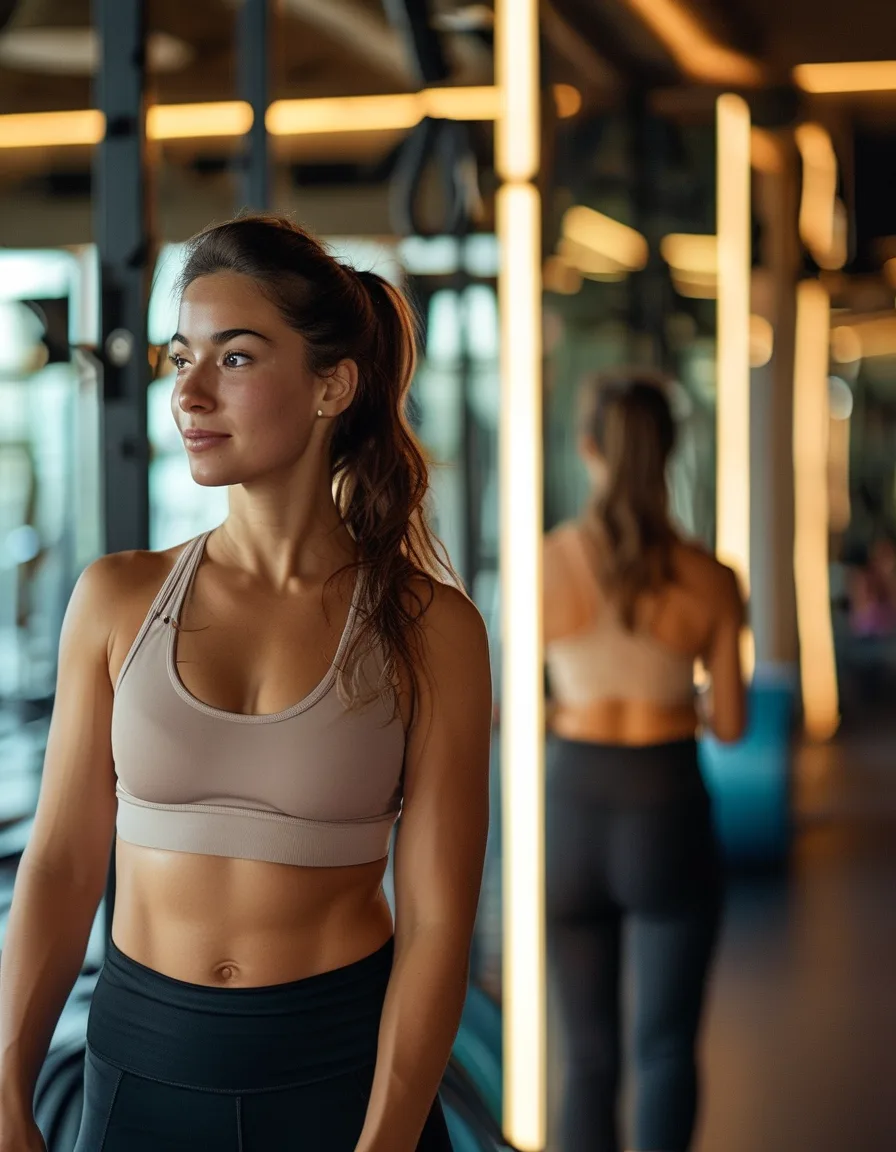
Why do mirrors change how a workout feels?
Watching yourself continuously adds an ongoing self-monitoring task on top of the physical effort. Attention splits, and both performance and mood can take the hit.
There’s also a mismatch problem. Visible body shape tells you nothing about in-the-moment cardiovascular effort or strength gains, so what you see and what you feel refuse to line up.
Continuous mirror viewing can activate self-comparison psychology similar to scrolling a feed — independent of anyone’s baseline body image. Add gym lighting and unusual viewing angles, and the self-image on offer often doesn’t match how you look anywhere else.
Which is the reframe: this is a perceptual and cognitive effect tied to self-monitoring during effort. It doesn’t require an underlying body image issue to happen.
What’s the actual psychological mechanism?
- Self-focused attention increases critical self-evaluation. This is a well-documented effect, and it operates regardless of actual appearance. Mirrors are a self-focus machine.
- Exertion doesn’t match your mental reference image. Flushed face, strained posture, effortful movement — all different from the version of yourself you carry around. The discrepancy alone feels unsettling.
- It disrupts flow. Visual self-assessment pulls attention outward, breaking exactly the absorbed state that makes movement enjoyable.
- The angle isn’t flattering by design. Gym mirrors are placed for technique visibility, not aesthetics. Nobody optimized that sightline for you.
Four compounding factors, none of which are about how you look.

What Nobody Tells You
Powerlifters avoid mirrors too. Not out of insecurity — because watching the bar path visually is slower and less accurate than feeling it. Some of the most confident people in the room have already opted out for entirely technical reasons.
The mirror is worst during cardio, not lifting. Lifting gives you a specific, brief thing to check. Twenty minutes on a treadmill facing your own reflection is unstructured self-monitoring with nothing to do, which is the exact condition the research describes.
You don’t have to fix your body image first. This is the most useful thing on the page. Because the mechanism is self-monitoring rather than appearance judgment, you can solve the mirror problem this week without embarking on a larger project.
Turning around is a legitimate strategy. Not avoidance, not a failure of nerve — a positioning decision, the same as choosing a rack away from the door.
Internal cues beat visual ones for most exercises. Attention on breath and muscle engagement improves mind-muscle connection and switches off the self-focus effect at the same time. One adjustment, two benefits.
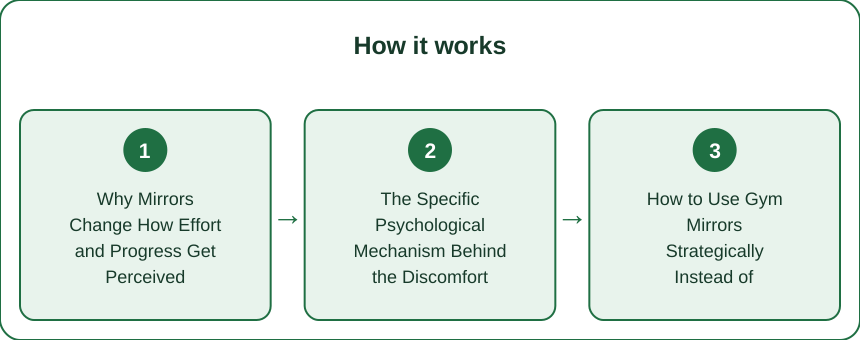
How do you use gym mirrors strategically?
Use them as a tool, not a companion. Brief, targeted checks for alignment on specific lifts — then look away. A mirror is a measuring instrument, not scenery.
Position deliberately. Pick equipment placement and facing direction to avoid unnecessary continuous exposure during exercises that don’t need a visual form check.
Choose your times and spaces. Quieter hours or mirror-light areas of the gym are a practical accommodation, not something to power through for its own sake. Our guide on avoidance versus confrontation covers when each makes sense.
Skip the bigger project. Addressing this doesn’t require resolving broader body image work first. Separate problems, separate timelines.
Shift attention inward. Breath, tension, the specific muscle doing the work. This is the single highest-leverage change on the list.
Worth saying plainly: if mirror discomfort is part of a broader pattern — persistent distress about appearance, avoiding activities you’d otherwise enjoy, disordered eating, or compulsive body-checking — that’s beyond the scope of a positioning tip. Talk to a doctor or a therapist who works with body image. It’s common, it’s treatable, and it deserves better than a workaround.
FAQ
Should I just find a gym without mirrors?
It’s a reasonable preference, though most gyms have them somewhere. Positioning and attention strategies tend to generalize better than facility-hunting, since they also work in class settings and hotel gyms.
Do I actually need a mirror for good form?
For a handful of lifts, a brief check helps. For most, filming a set from the side is more informative and less intrusive — you review it once instead of monitoring continuously. Just be aware that progress photos and video carry their own comparison traps.
Why does it feel worse in group fitness classes?
Because you’re facing a mirror and other people simultaneously, with no equipment to look at instead. The back row is a genuinely good answer here, and more people choose it deliberately than you’d think.
TL;DR:
- Mirror discomfort during exercise comes from continuous self-monitoring, which increases critical self-evaluation regardless of appearance.
- Exertion looks different from your mental reference image, and that mismatch alone feels off.
- Continuous visual monitoring also breaks the flow state that makes movement enjoyable.
- Gym mirrors are positioned for technique visibility, not flattery.
- Fix it with brief targeted checks, deliberate positioning, mirror-light times, and attention on internal cues.
- You don’t need to resolve broader body image work first — but persistent appearance distress or body-checking deserves a professional.
See It in Motion
Seen here: High Waist Jogger Sweatpants with Pockets — shop it on bubblelime.com
Keep Reading
This article is for general informational purposes only and is not medical advice. It is not a substitute for professional diagnosis or treatment. Always consult a qualified healthcare provider about your individual situation, especially before making significant changes to your diet or exercise routine.